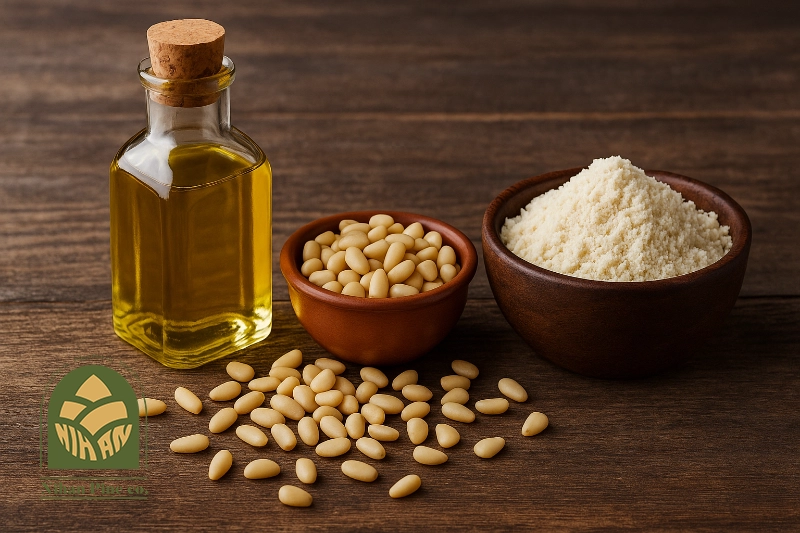
Pine nut oil is prized for flavor and unique fatty acids like pinolenic acid, studied for appetite and lipid effects, while pine-nut flour adds protein and healthy fats to gluten-free baking. Success hinges on oxidation control (PV/FFA), robust packaging, and clear, compliant claims.
Introduction
Value-addition converts a seasonal commodity into a portfolio of stable, differentiated products. For chilgoza, two compelling paths are cold pressed pine nut oil (culinary and wellness positioning) and pine nut flour (full-fat or defatted) for gluten-free, high-protein baking. The challenge is dual: keep messaging scientifically conservative and engineer quality against oxidation, contamination, and label risk.
Pine Nut Oil: Process Options & Positioning
- Cold-pressed / unrefined: robust aroma, golden hue, gourmet positioning; needs excellent oxygen/light barriers.
- Refined: neutral flavor, improved stability; better for mainstream food manufacturing.
- Clarification/filtration: reduces suspended solids that catalyze oxidation.
- Yield drivers: kernel oil content, press efficiency, temperature control.
Mini Takeaway: Choose process for the market, culinary storytelling vs. stability for industrial use.
What’s Special About Pinolenic Acid?
Pinolenic acid (PLA), a characteristic fatty acid in pine-nut oil, appears in literature exploring satiety hormones and lipid metabolism. While promising, claims must respect local regulations; avoid disease claims without approvals.
Mini Takeaway: Use the science to educate, not to over-promise—keep claims conservative.
Quality Targets for Oil
- Peroxide Value (PV): aim low at pack (e.g., ≤ 5 meq O₂/kg)
- FFA (as oleic): e.g., ≤ 1.5% at pack
- Sensory: no rancid/painty notes; clean, nutty aroma
- Heavy metals & contaminants: per destination regulations
Mini Takeaway: Numbers keep flavor honest—PV/FFA predict shelf life better than guesswork.
Packaging & Storage for Oil
- Opaque glass or high-barrier containers; nitrogen headspace
- Small SKU sizes reduce consumer-side oxidation
- Cool, dark storage from pack to shelf
Mini Takeaway: Treat light and oxygen as controllable variables, not fate.
Pine Nut Flour: Formats & Applications
- Full-fat flour: rich, tender crumb in cakes/cookies; strong nut flavor
- Defatted flour/meal: higher protein, better shelf-life, versatile in GF bakery
- Granulometry: fine for pâtisserie; coarser for crunch in coatings or granola
- Labeling: tree-nut allergen; gluten-free with cross-contact controls
Mini Takeaway: Choose fat level and particle size to match the job—pâtisserie vs. protein boost.
Safety & Compliance
- Mycotoxins: monitor aflatoxin (limits vary by market)
- Allergens: tree-nut allergen statements; HACCP for cross-contact
- Nutrition: leverage standard nut nutrition panels to support on-pack claims within local rules
Mini-Takeaway: Food safety is non-negotiable—document controls and train for them.
Go-to-Market: SKUs & Pricing Ladder
- Oil: 100–250 ml retail; 1–5 L food-service; culinary gift packs
- Flour: 250–500 g retail; 5–20 kg B2B
- Sampling: chef kits and R&D pouches accelerate adoption
- Story: origin, gentle extraction, freshness metrics (PV at pack)
Mini Takeaway: Pair smart SKUs with a story that buyers can repeat to their customers.
HS Codes (Orientation Only)
Base kernels commonly fall under 0802.92 (shelled); processed derivatives (oils, flours) map to different headings—confirm with your broker for exact coding in your lane.
Mini Takeaway: Don’t guess HS codes, confirm them before you print labels and invoices.
Conclusion
Turning chilgoza into oil and flour opens higher margin channels, if you engineer oxidation control and keep claims credible. Specify PV/FFA, choose high-barrier packaging, and build a narrative around freshness and origin. The result: repeat purchases and sustainable brand equity.
Sources & Useful Reads:
- Pine nut oil & pinolenic acid (PubMed): https://pubmed.ncbi.nlm.nih.gov/33831456/
- ScienceDirect mirror (review): https://www.sciencedirect.com/science/article/pii/S0163782721000138
- Nutrition baseline (USDA-derived): https://tools.myfooddata.com/nutrition-facts/784404/oz/1
- USITC HTS (orientation on base nuts): https://hts.usitc.gov/reststop/file?filename=Chapter+8&release=currentRelease
FAQs About From Nut to Oil & Flour: Value-Added Products from Afghan Chilgoza Pine
-
Is pine nut oil suitable for high-heat frying?
Unrefined oil is better for finishing and low-to-medium heat; refined suits higher-heat applications.
-
Does pine nut flour contain gluten?
Pine nuts are gluten-free, but manage cross-contact meticulously.
-
How long does oil stay fresh?
With low PV/FFA, opaque packaging, nitrogen headspace, and cool storage—several months to a year; verify with shelf-life studies.
-
What claims are safe?
Descriptive culinary claims; nutrition-facts-based statements. Health claims only if permitted by your regulator.
-
Which pack sizes move fastest?
For retail: 100–250 ml oil; 250–500 g flour. For B2B: 1–5 L oil and 5–20 kg flour.
